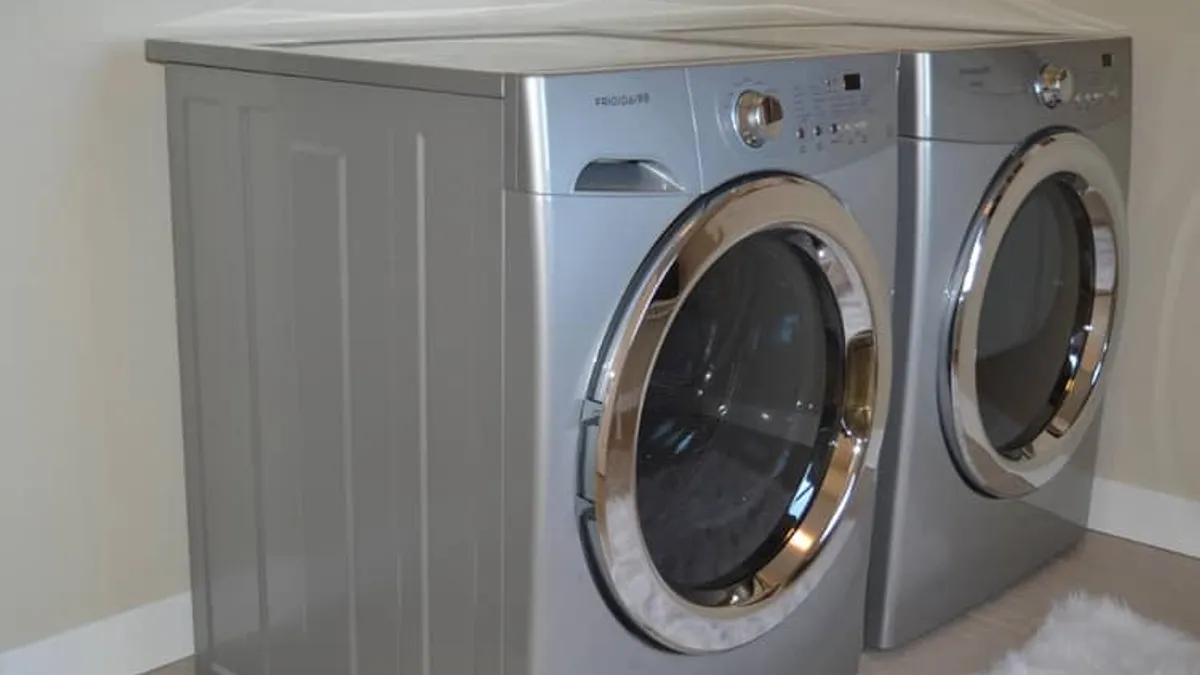
A burning smell indicates an active fire hazard or severely overheating component. Never ignore it or continue running loads. Because a burning odor can stem from restricted lint, a slipping belt, or electrical friction, only a qualified hands-on inspection can confirm the cause safely.
If your dryer smells like burning, stop the dryer and do not restart it until the cause has been assessed. A burning smell is a warning sign. It can mean lint has built up, airflow is restricted, a part is overheating, or, in a gas dryer, there is a separate gas concern that must be treated as an emergency.
Do not keep running loads to see if the smell goes away. Continued use can increase fire risk.
📑 Table of Contents (Click to Jump to Section) ▼
Safety First: What to Do Right Now
Put safety before troubleshooting.
1. Stop the dryer and do not restart it.
Turn the dryer off at the controls. Do not start another load.
2. If there is smoke, fire, or an odor that is getting stronger, leave and call 911.
Leave the area. Do not try to move a hot dryer, open panels, or investigate a suspected fire. Call 911 from a safe location. The U.S. National Park Service gives the same guidance for a dryer fire: evacuate and notify the fire department immediately by calling 911.
3. If you suspect a gas leak, leave immediately without operating switches.
A suspected gas leak is different from an ordinary burning odor. Natural gas has a distinctive sulfur-like or rotten-egg smell because utilities add an odorant so leaks can be detected. PG&E also lists hissing, whistling, or roaring sounds as possible signs.
If you suspect a gas leak:
- Alert others nearby and leave immediately to a safe location.
- Do not use light switches, phones, flashlights, matches, or vehicles until you are a safe distance away, because they can be ignition sources.
- From outside, call 911 for emergency assistance and then call PG&E at 1-800-743-5000.
Do not go back inside to ventilate, check the dryer, or shut off gas unless emergency responders tell you it is safe.
4. Unplug only if it is safe to do so.
If there is no smoke, flame, exposed wiring, or other hazard, and the plug is safely accessible, you may unplug an electric dryer. Do not approach a dryer that is smoking, burning, or shows signs of electrical damage. Do not touch a gas line.
5. Do not assume the dryer is safe because you opened a window or cleaned the lint trap.
Ventilation and lint-trap cleaning do not clear a dryer for use. If the cause is uncertain or the odor persists, arrange a qualified professional inspection before using the dryer again.
Why a Dryer Can Smell Like Burning
A clothes dryer uses heat and airflow to dry clothes. Air must move heat and moisture out through the exhaust duct. When airflow is restricted, heat builds up inside the dryer. Lint, dust, and fibers can then overheat and produce a burning odor.
A burning smell does not identify the failed part by itself. The same odor can come from lint, a vent restriction, a mechanical part, a heating or electrical part, or, in a gas dryer, a burner-related issue. The sections below describe possible causes, not a diagnosis.
Lint is combustible. The National Fire Protection Association (NFPA) identifies failure to clean as the leading cause of home clothes dryer fires. The U.S. Fire Administration advises cleaning lint filters every time the dryer is used and cleaning dryer vent ductwork every year.
Possible Causes of a Burning Smell
Lint Buildup in the Lint Screen, Housing, and Inside the Dryer
Lint does not only collect on the visible lint screen. Fine fibers can pass the screen and settle in the screen housing, blower area, and internal passages. Over time, this buildup can restrict airflow and overheat.
The NFPA advises cleaning the lint filter before or after each load and removing lint that has collected around the drum. For model-specific instructions, check your dryer manual. Samsung, for example, instructs users to pull the lint filter upward to remove it, clean both filters, and let them dry completely in the shade before reassembling.
If you clean the visible screen and the smell remains, lint may still be present in the housing or vent. That does not mean the dryer is safe to use. It means further inspection is needed.
Restricted Exhaust Airflow and a Clogged Dryer Vent
The exhaust duct carries hot, moist air outside. Lint, dust, or an obstruction in the duct can narrow the path and reduce airflow. When airflow drops, drying takes longer, the dryer runs hotter, and a burning odor can develop.
In older Palo Alto homes, especially around Old Palo Alto and University South, dryer vent ducts often run long distances through walls, subfloors, or attics before reaching the exterior. The longer the duct run and the more elbows it contains, the faster lint accumulates.
The NFPA advises making sure the air exhaust vent pipe is not restricted and the outdoor vent flap opens when the dryer operates. It also advises cleaning lint out of the vent pipe once a year, or more often if clothes take longer than normal to dry.
Vent material matters. Whirlpool manuals state: use a heavy metal vent, do not use a plastic vent, and do not use a metal foil vent, because failure to follow these instructions can result in death or fire. Rigid metal vent is recommended to avoid crushing and kinking. If a flexible metal vent is used, it must be fully extended and supported, and it should not be installed in enclosed walls, ceilings, or floors.
👉 If you suspect a vent restriction, do not keep running the dryer. Professional dryer vent cleaning in Palo Alto can address buildup through the full vent path safely without moving a hot appliance.
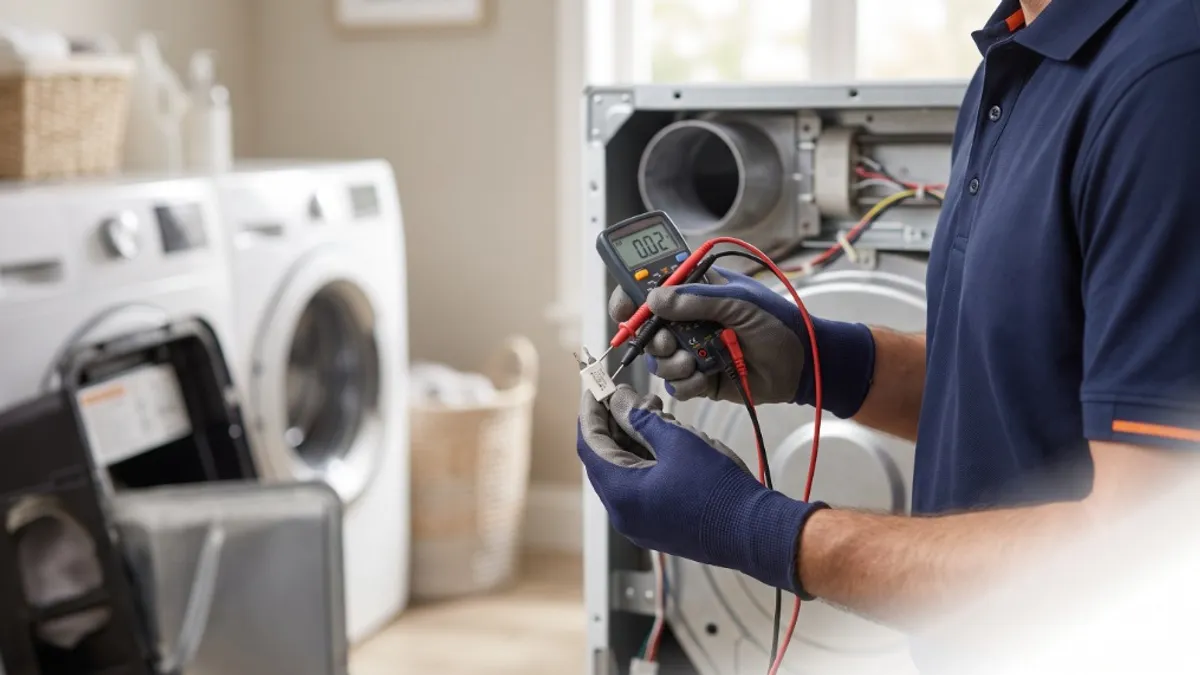
Testing thermal safety components and inspecting the cabinet for lint accumulation are vital steps when diagnosing burning odors.
Drive Belt, Drum Rollers, Bearings, and Drive Motor
A dryer drum turns on rollers and bearings, driven by a drive belt and a drive motor. When these parts wear, they can create friction, resistance, or uneven movement. A worn belt can slip and produce a distinct burning rubber odor. Worn rollers or bearings can make the drum harder to turn, which can make the motor work harder and overheat.
These are possible causes, not conclusions from odor alone. A squeak, thump, slow drum, or drum that stops turning can be useful information for a technician, but it does not prove which part failed. Dryer belt replacement is a repair that should follow an actual hands-on inspection, not a guess based on smell.
Heating Element, Thermostat, Thermal Fuse, and Electrical Connections
An electric dryer uses a heating element to produce heat. A thermostat helps regulate temperature by opening and closing the heating circuit. A thermal fuse is a separate one-time safety device that permanently opens the heating circuit if temperature exceeds a safe limit.
If a thermal fuse blows, the dryer may tumble without heat. Replacing the fuse alone does not fix overheating. The underlying cause, most often restricted airflow, must be found and corrected. A faulty thermostat that fails to open the heating circuit can also allow overheating, which can then cause the thermal fuse to blow as a final safeguard. Electrical connections, cords, and outlets can also overheat if damaged or improperly installed, and they should be inspected by a qualified person.
For heating-related symptoms, see our guide on why a dryer is not heating. For a dryer that will not start at all, see the guide on dryer won't start or turn on. If a heating element is confirmed faulty, explore heating element replacement, and if a thermal fuse has blown, see our thermal fuse replacement service.
Gas Burner and Igniter Issues in Gas Dryers
A gas dryer uses a burner and igniter to produce heat. Lint near the burner, a burner that does not light cleanly, or an igniter problem can produce an unusual odor. A gas dryer can also have a separate gas-leak risk that must not be confused with ordinary lint odor.
Never attempt to repair a gas burner, gas valve, or gas connection yourself. The NFPA advises that gas dryers should be inspected by a qualified professional to make sure the gas line and connection are intact and free of leaks. If you suspect a gas leak, follow the emergency steps detailed above.
For a general comparison of dryer types in our area, see gas vs. electric dryers for Palo Alto homes.
Items in the Dryer
Some odors come from what is being dried, not from a failed part. Do not dry items that have been exposed to gasoline, cleaning solvents, cooking oils, or other flammable substances. These materials can create an ignition hazard. Do not dry rubber, plastic, foam, or heat-sensitive items with heat, because they can melt or burn. Check pockets and care labels, and follow the manufacturer instructions.
What You Can Safely Check and What Needs a Professional
✅ What You Can Safely Check
When the dryer is off, cool, and shows no smoke, fire, or gas signs:
- Clean the lint screen before or after each load, as directed by your manual.
- Keep the area around and behind the dryer clear of lint, boxes, cleaning supplies, and other combustibles.
- Check from outside that the exterior vent flap opens when the dryer operates.
🔧 What Requires a Professional
Must be handled by a licensed, certified technician:
- Cleaning inside the internal cabinet and through the full duct run.
- Inspecting the exhaust duct, vent cap, blower wheel, belt, rollers, and motor.
- Multimeter testing of the heating element, thermostats, and thermal fuses.
- Inspecting gas valves, burner assembly, igniter, and gas line connections.
Scheduling regular preventative dryer maintenance can help identify airflow restrictions and mechanical wear before they escalate into safety hazards.
Maintenance That Reduces Fire Risk
The following practices reflect NFPA, USFA, and manufacturer guidance:
- Clean the lint screen before or after each load.
- Clean lint out of the vent pipe once a year, or more often if drying takes longer than normal.
- Use heavy metal venting. Do not use plastic or metal foil venting.
- Keep the exhaust vent and outdoor hood clear of lint.
- Do not overload the dryer. Follow the manufacturer operating instructions.
- Do not operate the dryer without a lint filter.
- Do not leave the dryer running when no one is home or when going to bed.
- Have the dryer installed and serviced by a professional.
- Have gas dryers inspected by a qualified professional to check the gas line and connection.
Vent length, layout, and cleaning frequency vary by home. A technician can assess your specific vent run rather than assuming a standard schedule fits every home.
How to Arrange Dryer Repair in Palo Alto
If the odor persists, the cause is uncertain, or you saw smoke or damage, do not use the dryer until it has been inspected.
To arrange service, call QuickFix Dryer Repair at (650) 487-8630 or use our online contact page. Describe when the smell started, whether there was smoke or a gas-like odor, whether the dryer still heats or turns, and whether drying time has changed. A technician can advise on next steps and current same-day availability.
For general appliance services and coverage, visit our main dryer repair in Palo Alto homepage.
Frequently Asked Questions
Is it safe to use a dryer that smells like burning?
No. Stop the dryer and do not restart it until the cause has been assessed. If there is smoke, fire, or an odor that is getting stronger, leave and call 911 from a safe location. If you suspect a gas leak, leave immediately without operating switches and call 911 and then PG&E from outside.
Why does my dryer smell like burning rubber?
A burning rubber odor is consistent with several possible causes, including a worn or slipping drive belt. It does not prove the belt has failed. Other causes, such as restricted airflow or overheating, can also produce a burning odor. A technician needs to inspect the belt, drum movement, airflow, and related parts to confirm the cause.
Why does my dryer smell like burning after cleaning the lint trap?
The lint screen catches only part of the lint. Lint can remain in the screen housing, blower area, and exhaust duct. A vent restriction can remain even when the visible screen looks clean. If the smell persists after cleaning the screen, do not keep using the dryer. Arrange an inspection.
Can a clogged dryer vent cause a fire?
Yes. Lint is combustible. When a vent is restricted, heat can build up and lint can ignite. The NFPA identifies failure to clean as the leading cause of home clothes dryer fires. Cleaning the lint screen before or after each load and cleaning the vent pipe once a year, or more often if drying takes longer, reduces this risk.
Why does my dryer smell hot but produce no smoke?
A hot smell without smoke can still signal restricted airflow or overheating. The dryer may be running hotter than normal because heat cannot exit through the vent. Stop the dryer and do not restart it until the cause is assessed. If the smell persists, arrange an inspection.
Why does my dryer smell like burning only when it heats up?
An odor that appears only during heating is consistent with heat acting on lint, dust, or a worn part. It does not identify the part. The dryer should not be used until the cause is assessed, because continued heating can increase risk.
When should I call a professional dryer repair technician?
Call a technician if the odor persists after cleaning the lint screen, if drying time has increased, if the dryer feels unusually hot, if it stops mid-cycle, if you see smoke or damage, if you suspect an electrical problem, or if you have a gas dryer and suspect any gas or burner issue. If you suspect a gas leak, treat it as an emergency first and do not wait for a repair appointment.
How can I arrange dryer repair in Palo Alto?
Call QuickFix Dryer Repair at (650) 487-8630 or use our contact page. Describe the odor, when it started, and any other symptoms. Ask about current availability and what information the technician needs before the visit.
This article was prepared by the QuickFix Dryer Repair team for general informational purposes. It does not replace an on-site safety inspection of your specific appliance.
Dryer Smells Like Burning? Safety Comes First.
Turn it off and call QuickFix for prompt, professional diagnostic and repair across Palo Alto.